

Much of this comes down to layering. Each element contributes to the composition, bringing depth and character while allowing the room to retain a sense of space.
Understanding how to layer furniture, rugs and lighting begins with the relationship between these elements. Their proportions, materials and placement determine whether an interior feels harmonious or visually crowded.
Begin with the furniture and its proportions
Furniture establishes the structure of a room. Before introducing rugs, lighting or decorative accessories, the principal pieces need to sit comfortably within the architecture.
In a spacious living room, generously proportioned sofas and armchairs can create a welcoming seating arrangement. A substantial coffee table gives the composition a central point, while occasional tables introduce variation in height and silhouette.
The arrangement should also allow the eye to move through the space. Leaving room between individual pieces helps distinguish their forms and prevents even a large interior from feeling overcrowded.
For a more layered appearance, furniture does not need to belong to the same collection. A contemporary sofa can sit alongside a more traditional accent chair when the proportions and materials complement one another.
The Amber chair by Bernhardt, with its button tufting, tailored welting and balanced proportions, offers a classic silhouette that can introduce contrast alongside more contemporary furniture. Its detailing gives the seating arrangement character without requiring additional ornamentation.
The distinction between individual pieces also brings a room closer to the character of an interior developed over time. As explored in What makes a furniture brand worth collecting: Heritage, craftsmanship and legacy explained, craftsmanship and enduring design have an important place in furniture selection.
Explore the living room furniture collection for pieces that can be combined across different styles.
Use rugs to bring the arrangement together
A rug does more than introduce softness underfoot. Its dimensions and placement help establish the boundaries of a seating area, especially in larger rooms where furniture can otherwise appear disconnected.
For a luxury living room, a generously sized rug is often more effective than a smaller piece positioned only beneath the coffee table.
Ideally, the rug should extend beneath the front legs of the principal seating, creating a visual connection between the sofa, chairs and central table. Where the proportions allow, placing all the furniture legs on the rug creates an even more unified arrangement.
The material and pattern also influence the room's character.
A softly textured neutral rug provides a quiet foundation for furniture with strong silhouettes. A patterned rug can become a defining feature, especially when the surrounding upholstery and accessories are more restrained.
When does layering rugs work?
Layering rugs over rugs can introduce additional texture and visual interest, although it is not necessary in every interior.
The technique works best when there is a clear difference between the two pieces.
A large neutral base rug can accommodate a smaller patterned or textured rug, creating a focal point within the seating arrangement. The lower rug should remain sufficiently visible to frame the upper piece.
Combining different pile heights can also be effective. A flatwoven foundation provides a stable surface beneath a softer wool rug, while a contrast in weave gives the arrangement greater depth.
However, rooms with richly patterned upholstery, distinctive flooring or statement furniture may benefit from a single rug. Introducing a second can compete with the details already present.
Browse the rug collection at Interiors to explore different textures, colours and designs.
Layer lighting at different heights
Lighting has a remarkable influence on how furniture and materials are perceived.
A room illuminated entirely from above can appear flat, even when it contains beautifully detailed furniture. Introducing light at different heights allows individual surfaces, textures and architectural features to become more visible.
The three principal layers of lighting are ambient, task and accent lighting.
Ambient lighting provides general illumination through chandeliers, pendants or recessed ceiling fixtures. Task lighting serves a specific purpose, such as a reading lamp beside an armchair. Accent lighting draws attention to artwork, architectural details or decorative objects.
The most inviting interiors bring these three layers together.
A chandelier may establish the central presence of a living room, while table lamps introduce a softer light around the seating. A floor lamp beside an accent chair can illuminate a quieter corner, giving it a distinct purpose within the larger space.
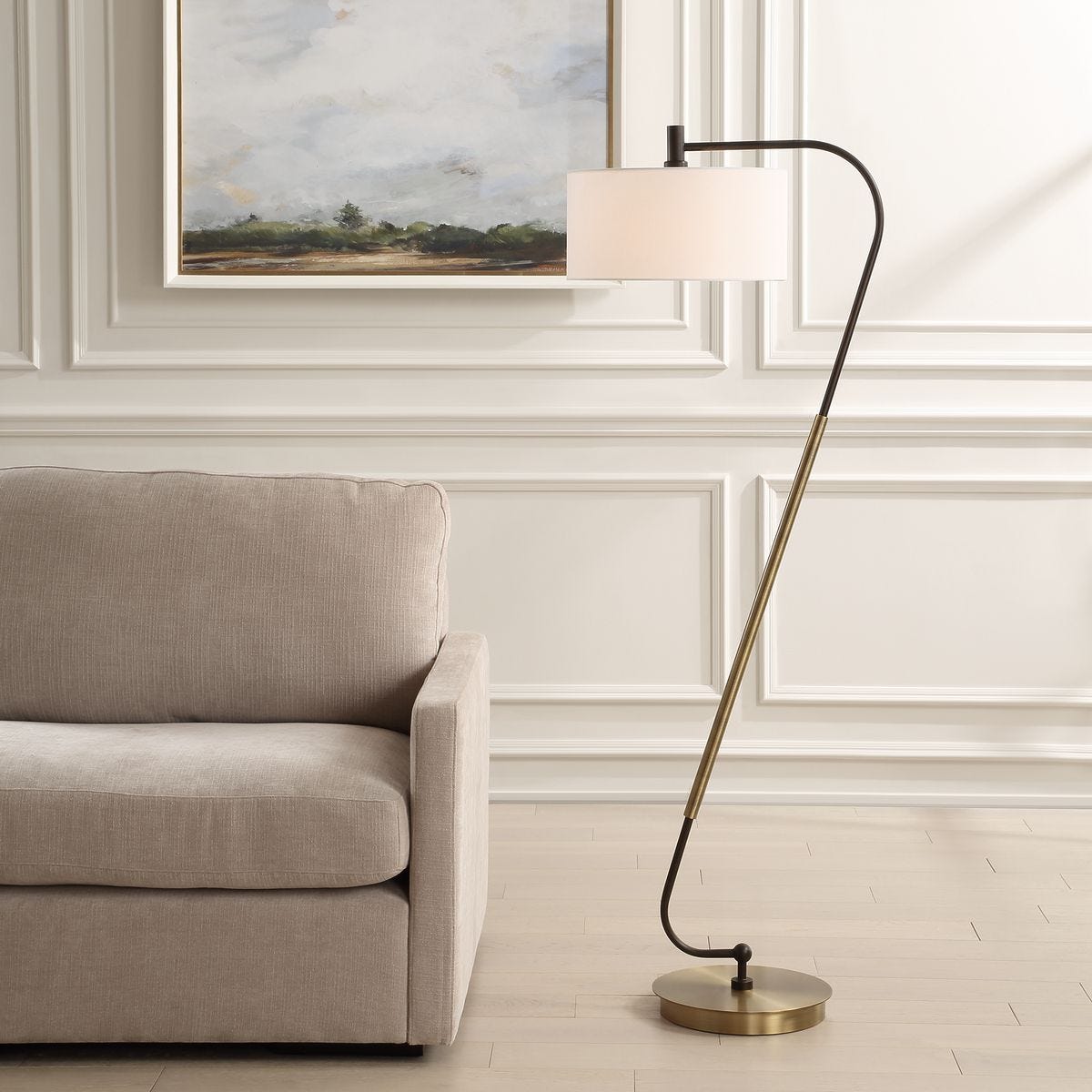
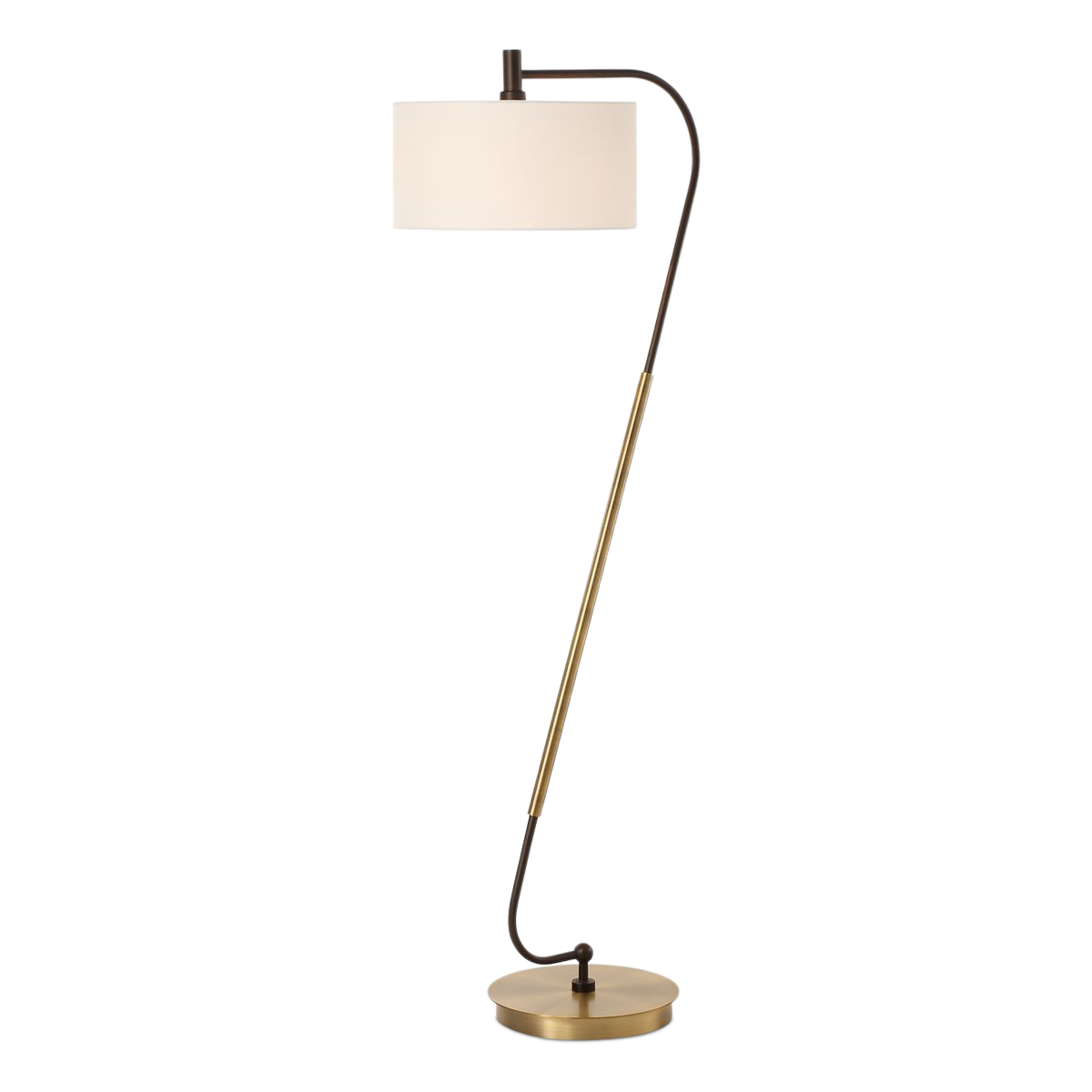
The Irwin floor lamp by Uttermost offers an example of lighting that contributes to the composition beyond its practical purpose. Its arched steel frame combines antique brass and dark bronze finishes, while a suspended white linen shade introduces softness. Positioned beside an upholstered chair, its curved silhouette provides contrast against more structured furniture.
The finish and silhouette of the fixtures deserve equal attention. A sculptural lamp can complement the lines of an occasional table, while a pendant with a metal finish introduces contrast against wood or upholstered furniture.
Discover Interiors lighting collection. For further inspiration, Bedding, lighting and décor ideas for the ultimate summer home explores how these elements contribute to a comfortable interior.
Bring together different materials and textures
Layering becomes especially interesting when the room includes a variety of materials.
Wood, marble, glass, metal and upholstery each have a different visual weight. Their combination can create a richer composition, provided the finishes have enough contrast to remain distinct.
A marble coffee table, for example, brings a smooth and reflective surface to a room furnished with soft upholstery. A wooden side table can introduce warmth, while a metal lamp adds a finer architectural detail.
The same principle applies to textiles.
A linen sofa paired with velvet cushions introduces variation in texture. A leather accent chair can provide a different finish within an otherwise fabric-led seating arrangement.
Rather than introducing as many materials as possible, look at how each surface relates to the next.
A room with several polished finishes may benefit from the softness of a woven rug or matte ceramic accessories. Where the furniture already features pronounced grain, veining or texture, simpler surrounding finishes can help those qualities stand out.
The Shuffle table lamp by Uttermost illustrates how material and form can introduce texture within a restrained palette. Its stacked travertine blocks create a sculptural base, complemented by a softly textured off-white linen shade. The contrast between stone and fabric gives the piece depth without relying on colour.
Read Best furniture materials for UAE interiors in 2026 for more on selecting materials that suit different spaces.
Allow artwork and decorative objects their own space
Artwork and decorative accessories bring another dimension to a room, although their placement is just as important as their individual appearance.
When combining statement art and patterned rugs, it helps to establish which element should command the most attention.
A large artwork with strong colours or an intricate composition may sit more comfortably above a neutral sofa and a subtly textured rug. Alternatively, a distinctive patterned rug can provide the visual interest, allowing the artwork to take on a quieter role.
Colour can create a connection between the two without requiring an exact match. A muted shade from the artwork might reappear in the rug or upholstery, giving the arrangement a natural sense of continuity.
Decorative objects can follow a similar approach.
On a coffee table, a sculptural bowl, a small collection of books or a vase may be sufficient. The height and form of these pieces should complement the table rather than obscure its surface entirely.
A long console offers room for a more varied arrangement, perhaps a table lamp at one end and a grouping of objects at the other.
The spaces between accessories are equally important. Negative space allows the individual forms to be appreciated and gives the overall arrangement greater clarity.
Explore decorative accessories at Interiors to find pieces that complement your furniture and interior palette.
Carry the composition through the home
The principles of layering extend beyond the living room.
In the dining room, a substantial table can establish the central composition, supported by upholstered chairs, a pendant light and a sideboard that introduces a contrasting finish.
A dining room with richly grained wood furniture, for instance, can benefit from the softness of upholstered seating and the reflective quality of glass or metal lighting. These contrasts give the space depth while allowing the dining table to remain the focal point.
In the bedroom, the headboard provides a natural focal point, with bedside lighting, rugs and textiles introducing softness around it.
The City Life king sized bedroom set by ALF Italia demonstrates how layering can begin within the furniture itself. Its headboard features overlapping panels in contrasting finishes, with warm walnut veneer bringing depth to the composition. Upholstery, bedside lighting and a softly textured rug can introduce further contrast without competing with the bed's architectural detailing.
The scale of each element should reflect the room. A generously detailed headboard may require little additional wall decoration, while a simpler bed frame can accommodate more expressive lighting or artwork.
The same attention to proportion applies throughout the home, allowing each room to have its own character while remaining connected to the wider interior.
A cohesive room begins with the whole composition
One of the most common challenges in furnishing a home is selecting each element independently.
A sofa may be chosen for its comfort, a rug for its pattern and a chandelier for its sculptural form. Each may be beautiful in its own right, yet the combination can feel unresolved if their proportions, colours and finishes compete.
A successful interior can bring together different furniture styles, contrasting materials and individual pieces collected over time. The common thread might be a consistent colour temperature, a recurring material or simply a shared sense of proportion.
As explored in Fifty years of curation: What Interiors has learned about the homes that last, the relationship between individual pieces contributes to the lasting character of a home.
Explore the furniture, rugs, lighting and décor collections at Interiors to discover pieces that work beautifully together.
التشكيلة المختارة


 أبلغوني عند توفره


قد يلفت إنتباهك أيضًا
قد يلفت إنتباهك أيضًا