
إجمالي الطلب(شامل ضريبة القيمة المضافة)



 التحول إلى الدفع

A timber tone reappearing in a frame, the same warm metal used at different scales or a colour moving quietly from dining upholstery into the living room can be enough. These small relationships allow each area to keep its own character while still belonging to the same interior.
The finishing touches become even more important when the spaces are used for entertaining. Guests move between the dining table and the living area so the experience of the room is continuous. Lighting, artwork, materials and the way each surface is treated all contribute to that sense of flow.
Begin with what already connects the rooms
Before introducing anything new, look at the materials already present across the living and dining areas.
The dining table may establish a dominant timber tone. Upholstered chairs might introduce a warm neutral or a deeper accent colour. In the living room, a sofa or occasional piece may already carry one of those references.
Repeating a material does not require repeating the furniture. A dark timber dining table can relate to a smaller timber detail in the living room without another substantial piece in the same finish. The same applies to metal. Brass, bronze or darker metal can appear through lighting, furniture detailing or wall pieces at different points across the room.
This creates continuity without making an open-plan interior feel overly coordinated.
Let the lighting establish different moods
Lighting has a particular role in connected spaces because the dining and living areas rarely need the same atmosphere at the same time.
Over the dining table, a pendant or chandelier can give the area a clear centre. In the living room, softer sources at lower levels create a more relaxed setting after dinner.
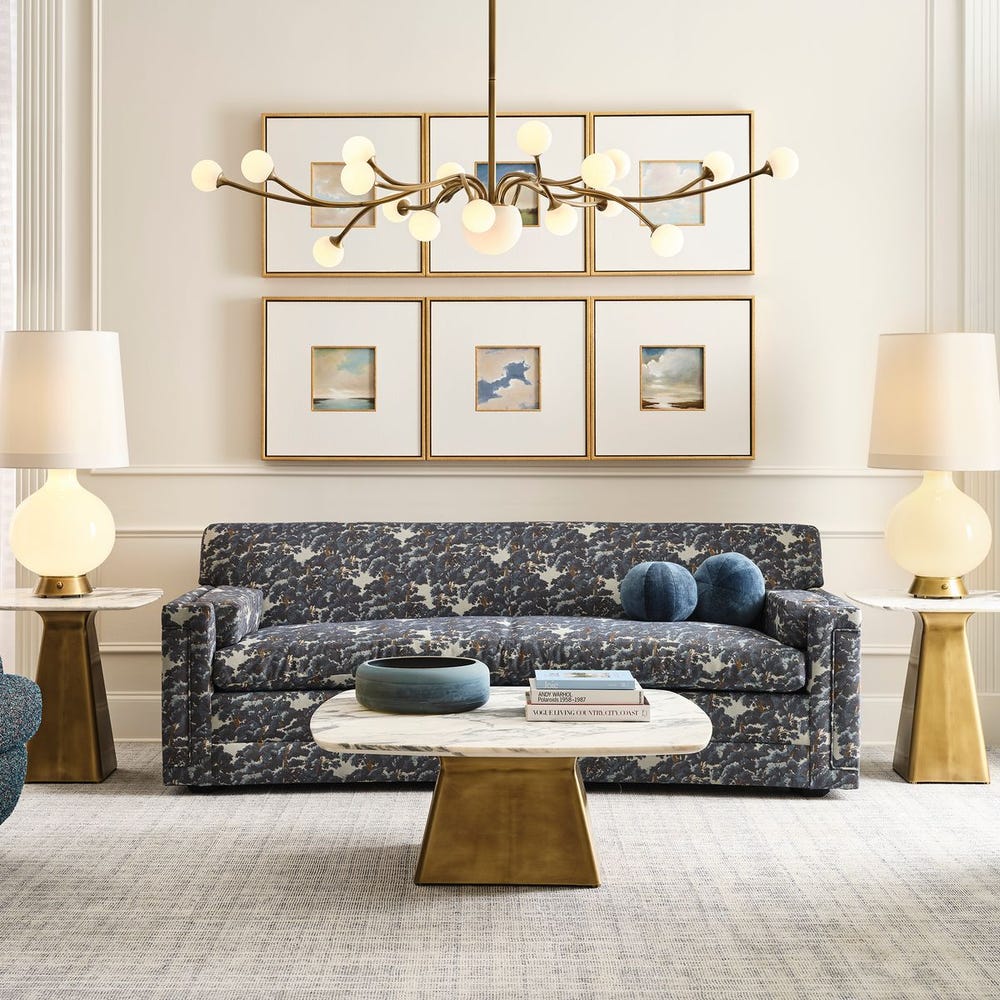
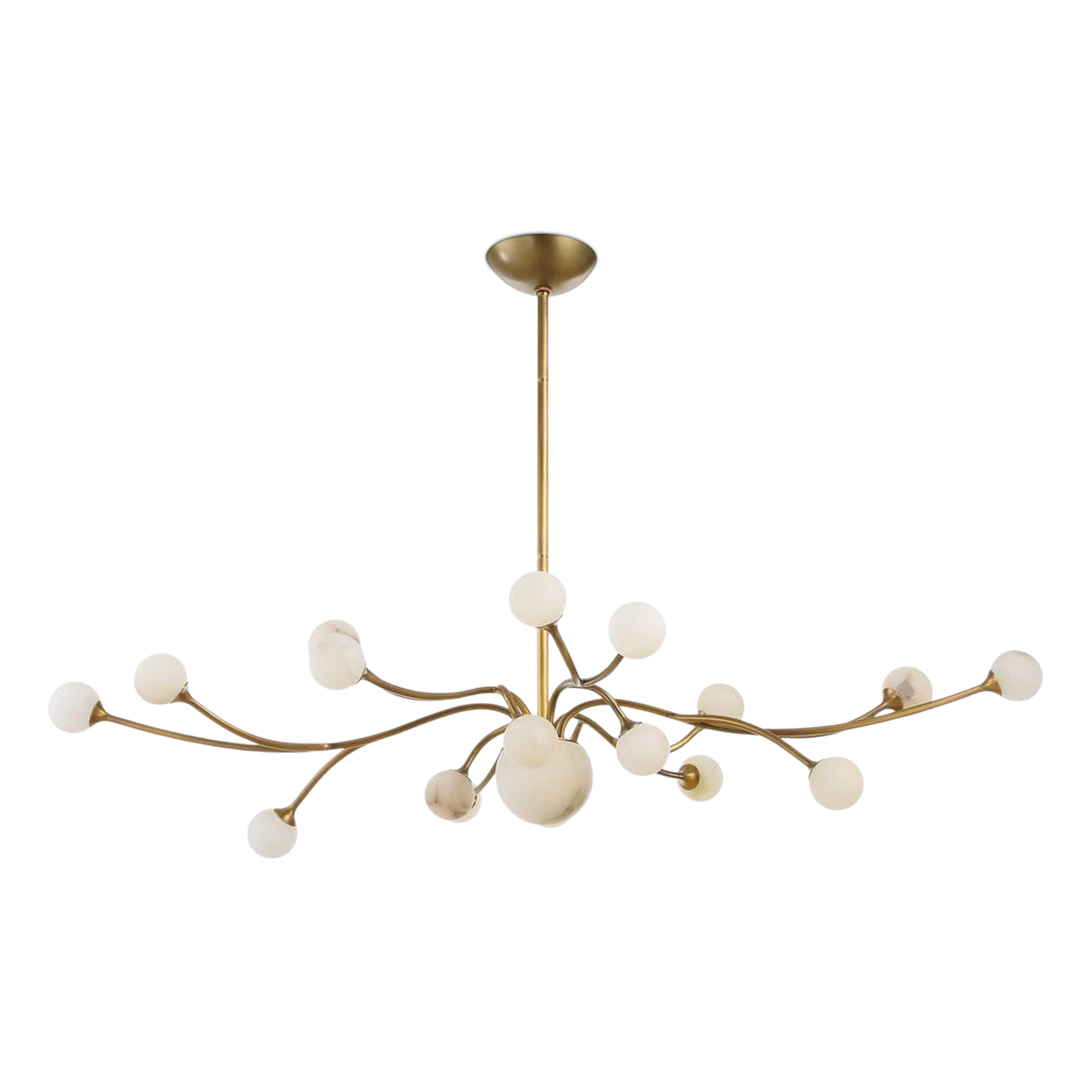
The fixtures do not need to match. Their relationship might come through finish, shape or visual weight. A sculptural pendant such as the Flurry pendant by Uttermost can establish the dining zone while simpler lighting elsewhere allows it to remain the dominant fixture.
Matching every metal finish exactly can make an open-plan room feel too prescribed. It is often enough for the finishes to share a similar warmth or depth.
The wider collections of chandeliers and pendants offer different ways to establish this relationship across a larger interior.
Pay attention to what you see from one room to the other
Connected living and dining spaces are experienced through a series of views.
From the sofa, the dining table, sideboard and lighting may all sit within sight. From the dining table, the eye may travel towards artwork, a mirror or a grouping in the living room.
These views deserve the same attention as the rooms themselves.
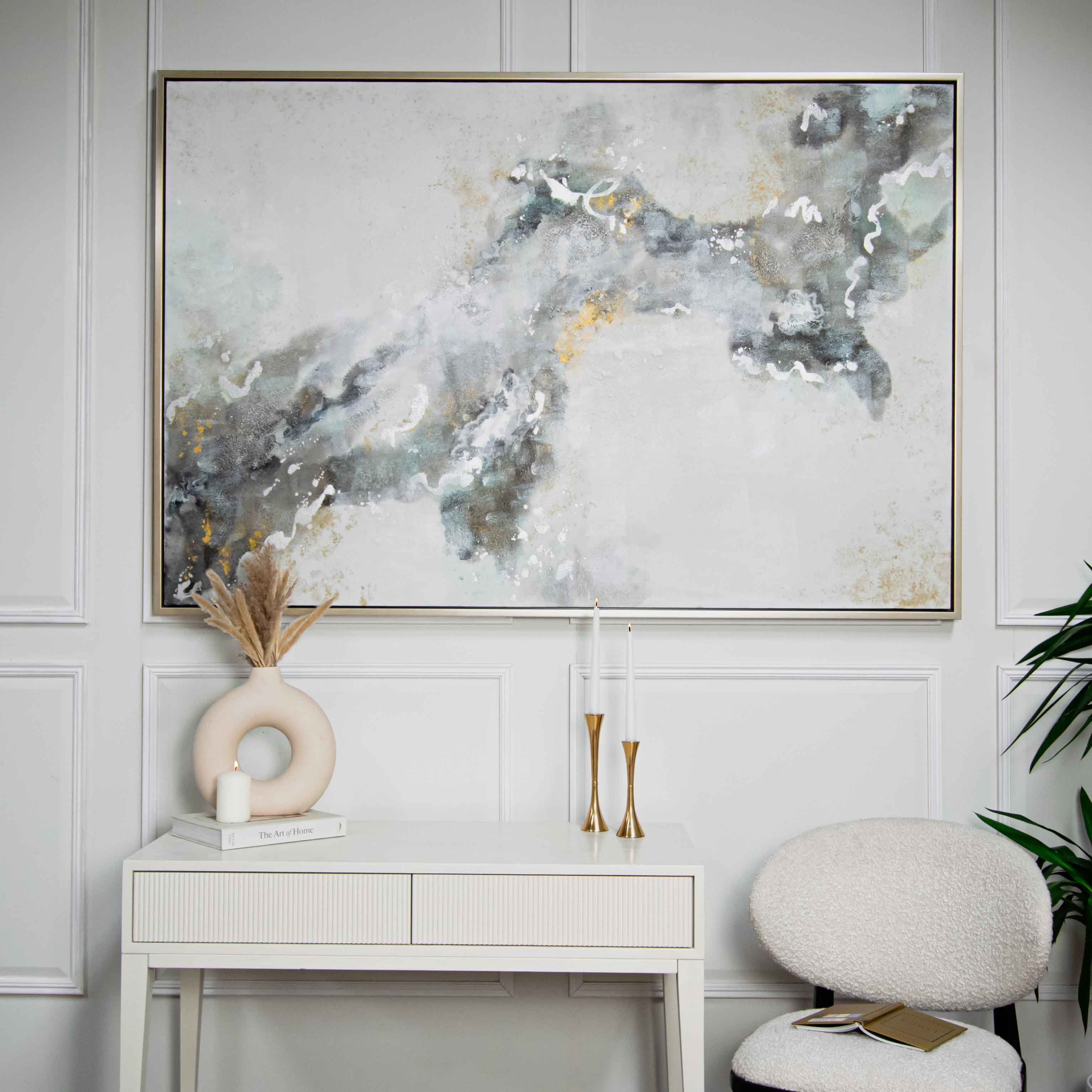
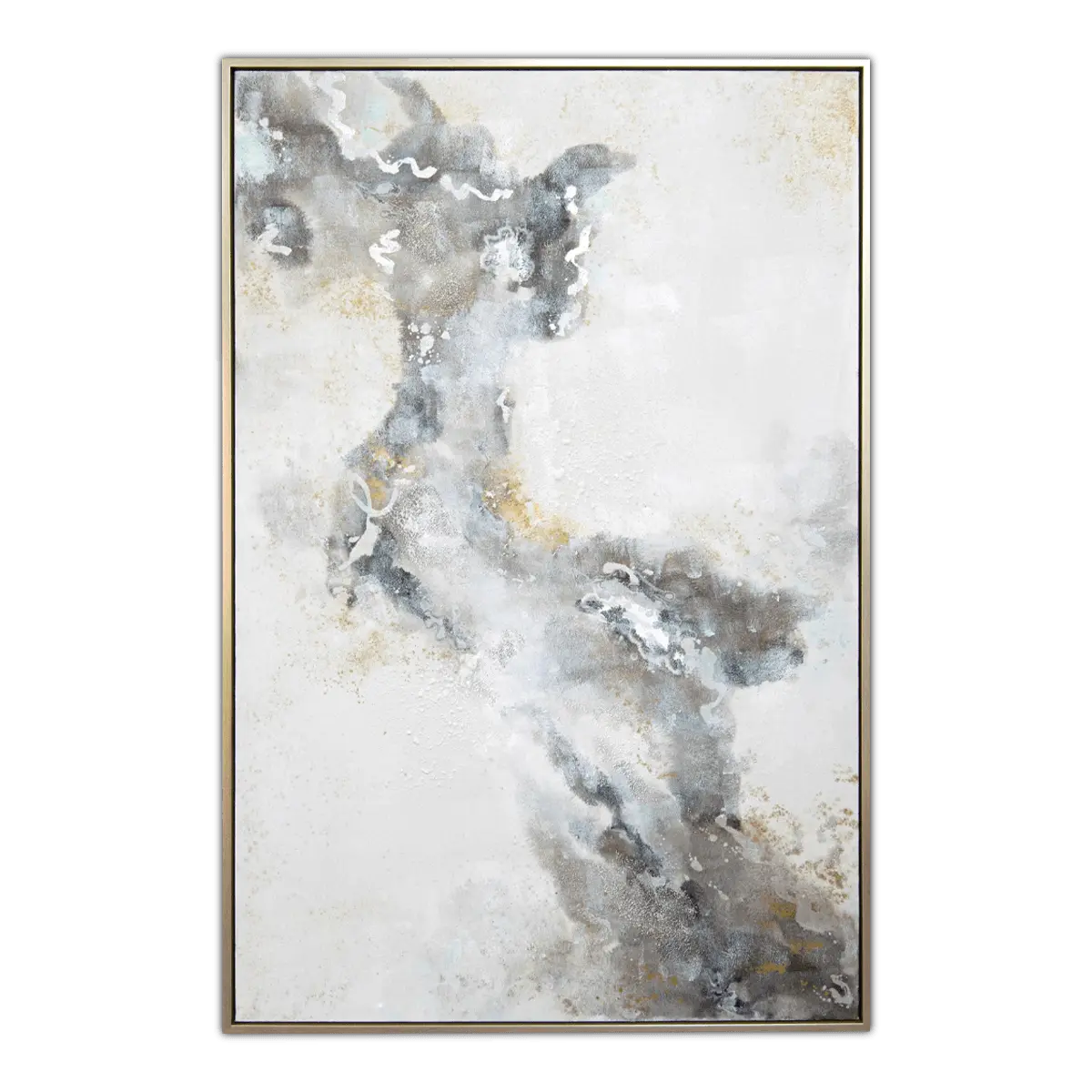
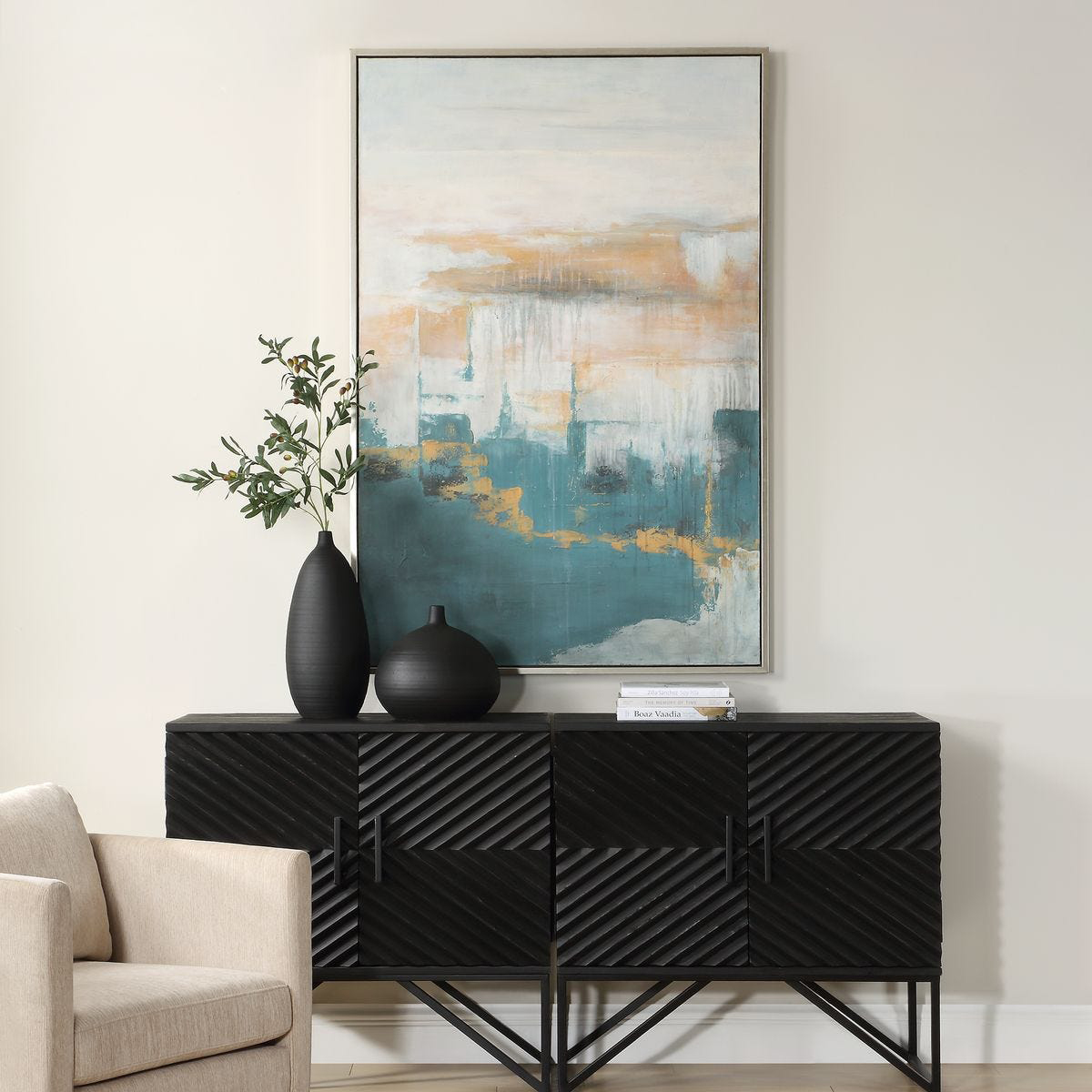
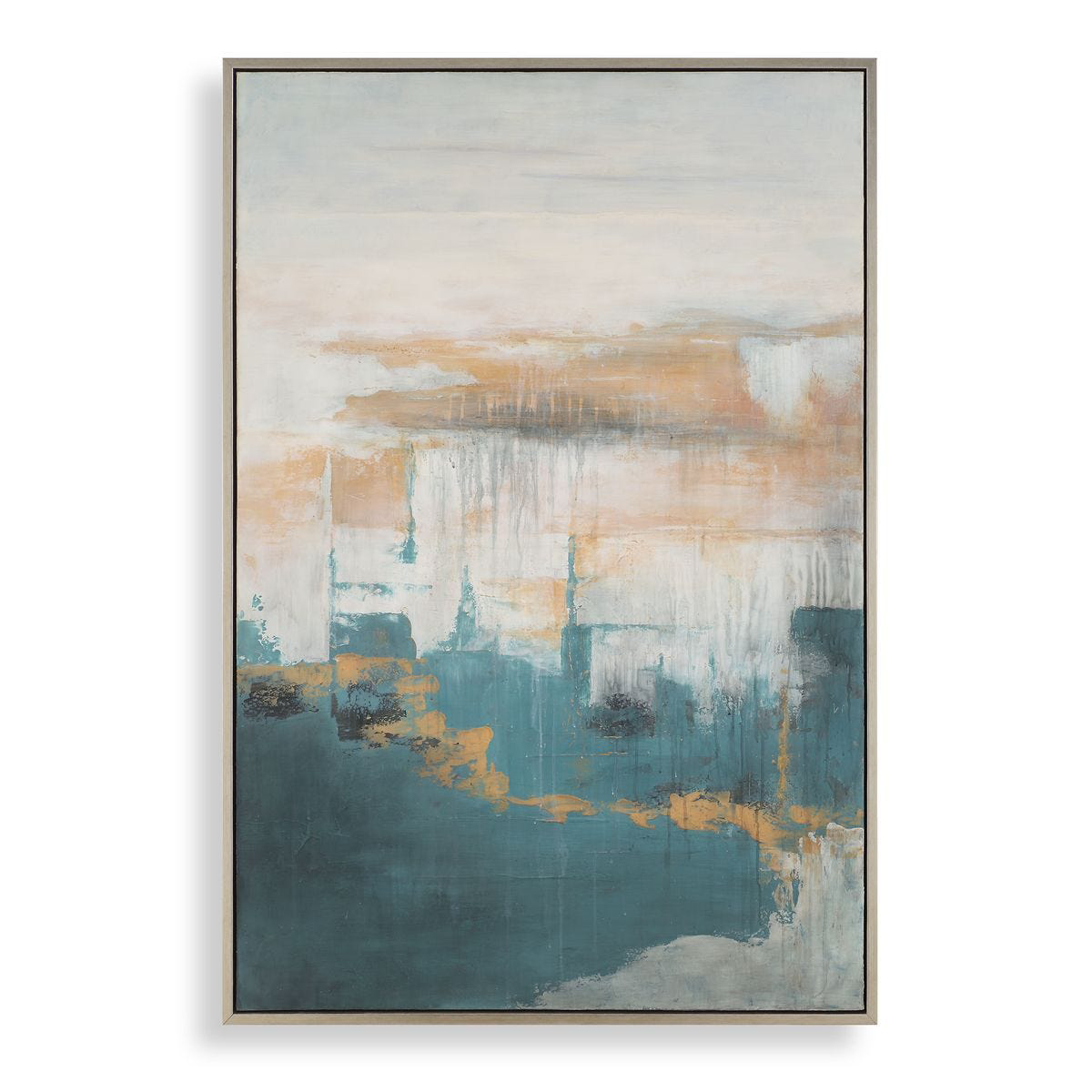
A piece of wall art can introduce a colour or material already present elsewhere in the interior. The Avarie wall art set of three by Uttermost can be used in this way, creating a visual point between living and dining areas without requiring another piece of furniture.
A mirror can work differently. Its position changes what becomes visible from the adjoining space so the reflection itself becomes part of the room. Rather than choosing wall pieces only for the wall they occupy, it is worth seeing how they read from across the wider interior.
Allow one finish to travel through the space
Wood and metal finishes often provide the clearest visual link between connected rooms.
There is no need for every timber to be identical. Related undertones usually matter more. Warm walnut can sit comfortably with darker brown woods while pale oak is easier alongside finishes that share a lighter or more neutral character.
The same principle applies to metals. A dining light in antique brass can sit alongside darker bronze or warm metallic detailing elsewhere without creating a mismatch.
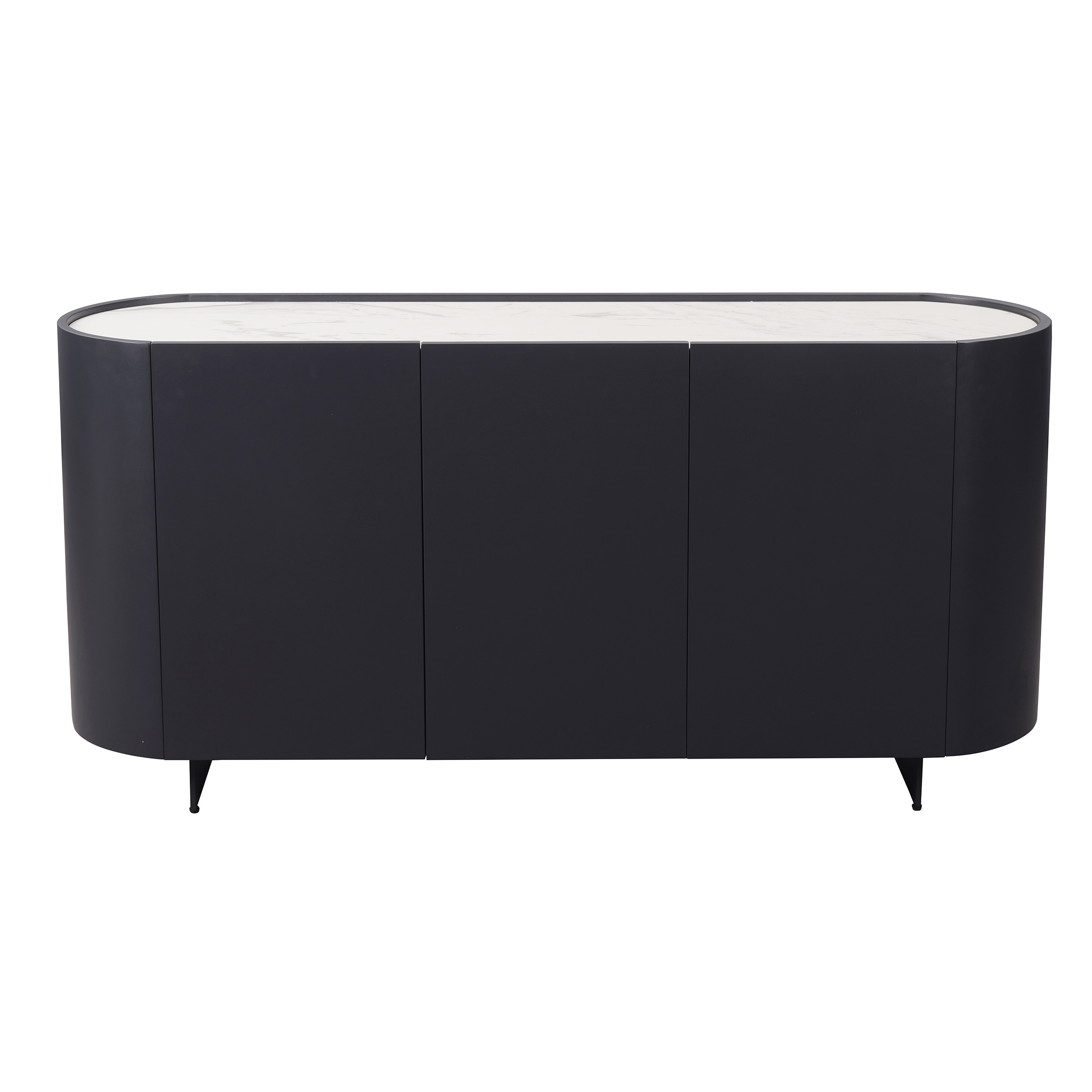
A sideboard offers a useful bridge because it combines furniture scale with smaller material details. The Ecli09GFTX0625
pse sideboard can anchor the dining area while finishes elsewhere in the living room pick up elements of its palette more discreetly.
The repetition should become apparent gradually as the eye moves through the room.
Give the rooms a hierarchy
When living and dining areas are visible together, every surface does not need an equally strong decorative moment.
If the dining table carries a substantial centrepiece, the sideboard can remain quieter. If artwork gives one wall considerable presence, the coffee table may only need a small number of objects.
Looking at the entire open-plan space in one view helps with these decisions. Several highly styled surfaces competing within the same sightline can make even a large room feel busy.
A simpler arrangement on one surface also gives greater importance to another. This balance becomes especially useful when hosting because the room still feels complete after dining tables and occasional surfaces begin to fill with glasses, serving pieces and personal belongings.
Keep the connection subtle
The strongest open-plan interiors usually reveal their connections slowly.
A finish appears once in the dining area then again in a smaller detail across the room. A colour moves from upholstery into artwork. Lighting changes in intensity while remaining related in character.
These links give a living and dining room a sense of continuity while allowing both areas to keep their own identity.
When the spaces are used for entertaining, that distinction becomes valuable. The dining room can feel more composed around the table while the living area becomes softer and more relaxed. The details between them allow the transition to feel natural.
Explore living room furniture and dining furniture to see how materials, finishes and forms can work across connected spaces.
التشكيلة المختارة


قد يلفت إنتباهك أيضًا
قد يلفت إنتباهك أيضًا
