
Order Total(Inclusive of VAT)



 Proceed to Checkout

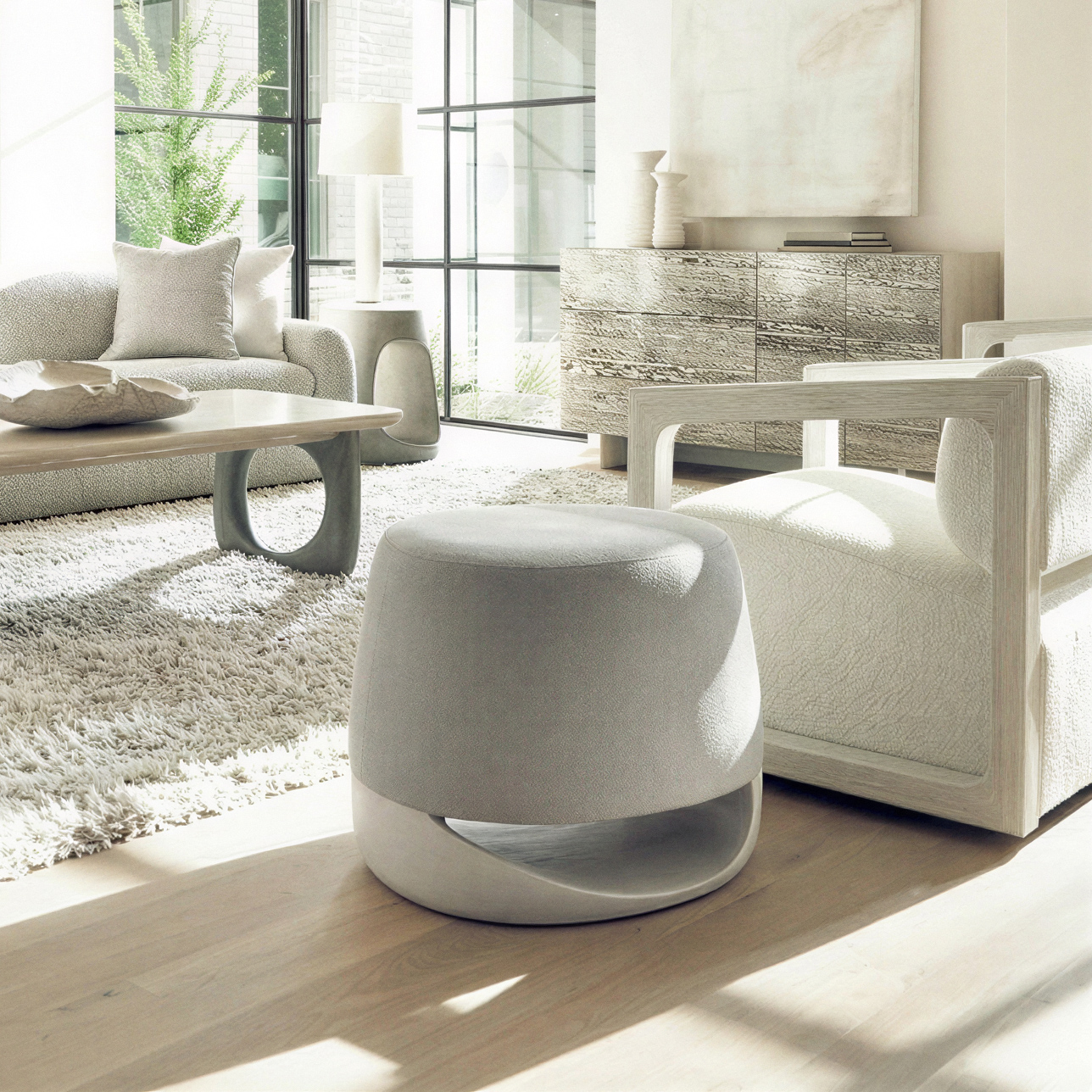
Occasional tables bring surfaces closer to where they are needed. An ottoman can soften a formal arrangement while a floor lamp changes the atmosphere once evening arrives.
These secondary pieces often determine whether a room feels ready for conversation or arranged primarily to be looked at.
A good living room layout takes both into account. The furniture should hold the room visually while allowing people to sit comfortably, move through it easily and speak without having to turn across the space.
Arrange the seating around people
In a conversational seating arrangement, chairs should relate to the sofa rather than simply occupy an empty corner.
A pair of accent chairs opposite a sofa creates a clear exchange between the two sides of the room. One chair placed at an angle works well where the layout is less formal, especially when there is already substantial seating elsewhere. The important detail is orientation. Turning a chair slightly towards the centre can make it feel connected to the group without producing a rigid arrangement.
Distance matters too. Seating placed too far apart weakens the sense of a conversation area while crowding the pieces together compromises movement. As a useful guide, allow around 75 to 90 cm for a main walkway. Where the route is less frequently used, approximately 60 cm may be sufficient.
The Sebastian accent chair by Uttermost is one example of how an accent chair can introduce a distinct silhouette and material contrast without requiring a matching pair.
Explore living room furniture as a composition rather than a collection of individual pieces.
Open-plan rooms need a clear centre
In an open-plan living and dining space, an accent chair can help establish where one area ends and another begins.
The chair does not necessarily need to sit against a wall. Bringing it slightly into the room can strengthen the seating group and leave a clearer relationship between the living and dining zones. The back and side profile become more important in this type of layout because the chair is visible from several viewpoints.
A swivel chair offers another possibility. It can face the sofa during conversation then turn towards another part of the room when needed. This flexibility suits open-plan interiors where one seat may need to respond to more than one focal point.
Rugs, lighting and the placement of occasional furniture can reinforce the boundary without creating a physical divide. The result should still read as one interior, with each area having its own centre of gravity.
The side table belongs to the seat
Occasional tables work best when their position follows how the seating will be used.
A side table beside an accent chair should be close enough to reach without leaning forward or turning awkwardly. Its height will usually sit around the level of the chair arm, or slightly below it. A table that rises well above the arm can feel disproportionately tall while one positioned too low becomes less useful.
There is no set number of side tables for a living room. A large seating arrangement may need several. In a smaller room, one table between two chairs can serve both.
Nesting tables are useful when the room changes between everyday living and entertaining. Kept together, they occupy little space. When guests arrive, they can be separated and moved closer to individual seats.
The same principle applies to coffee and side tables more broadly. Each should answer a practical need within the seating arrangement rather than being added simply to fill the space.
Ottomans and benches loosen the arrangement
A living room designed for entertaining benefits from furniture that is not fixed to one role.
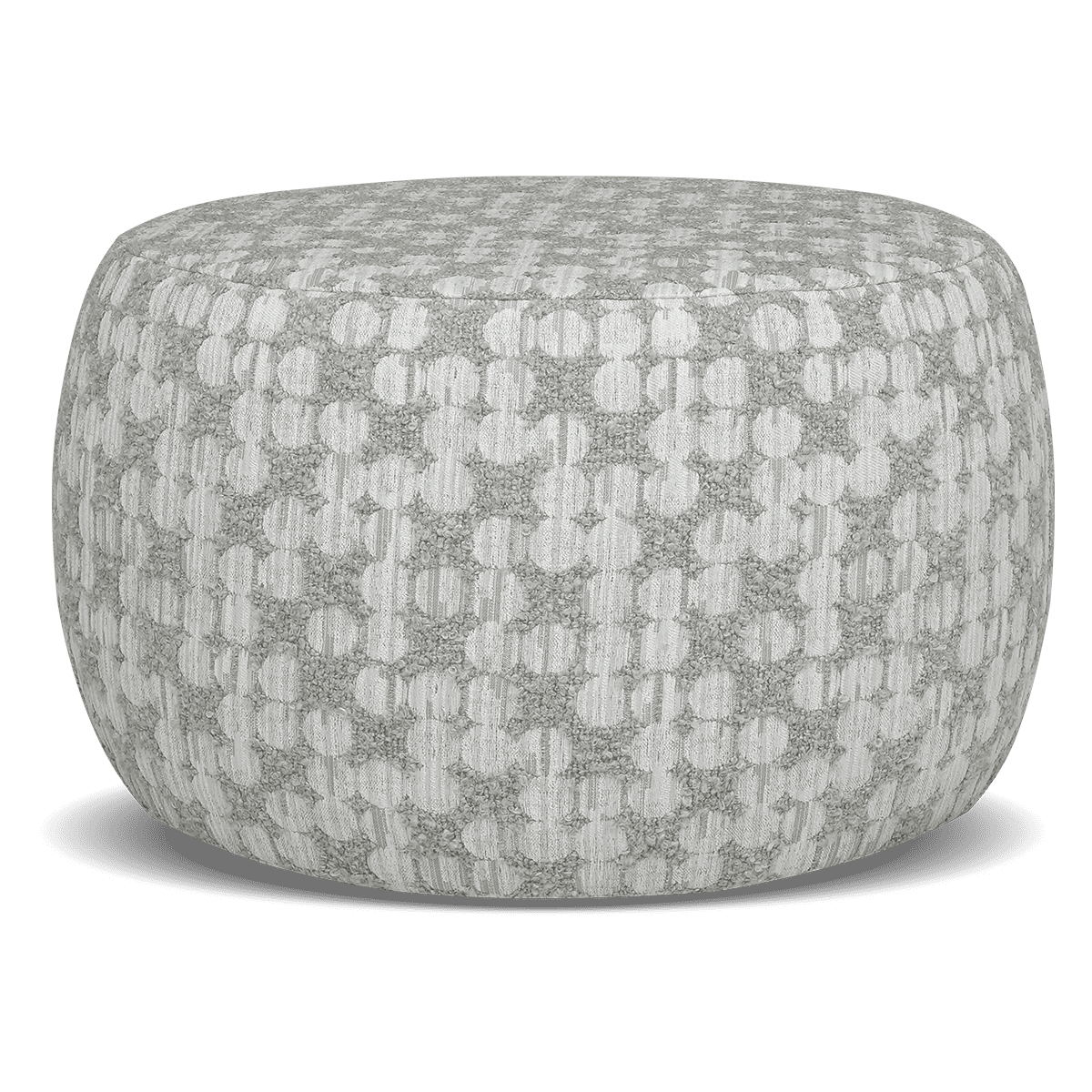
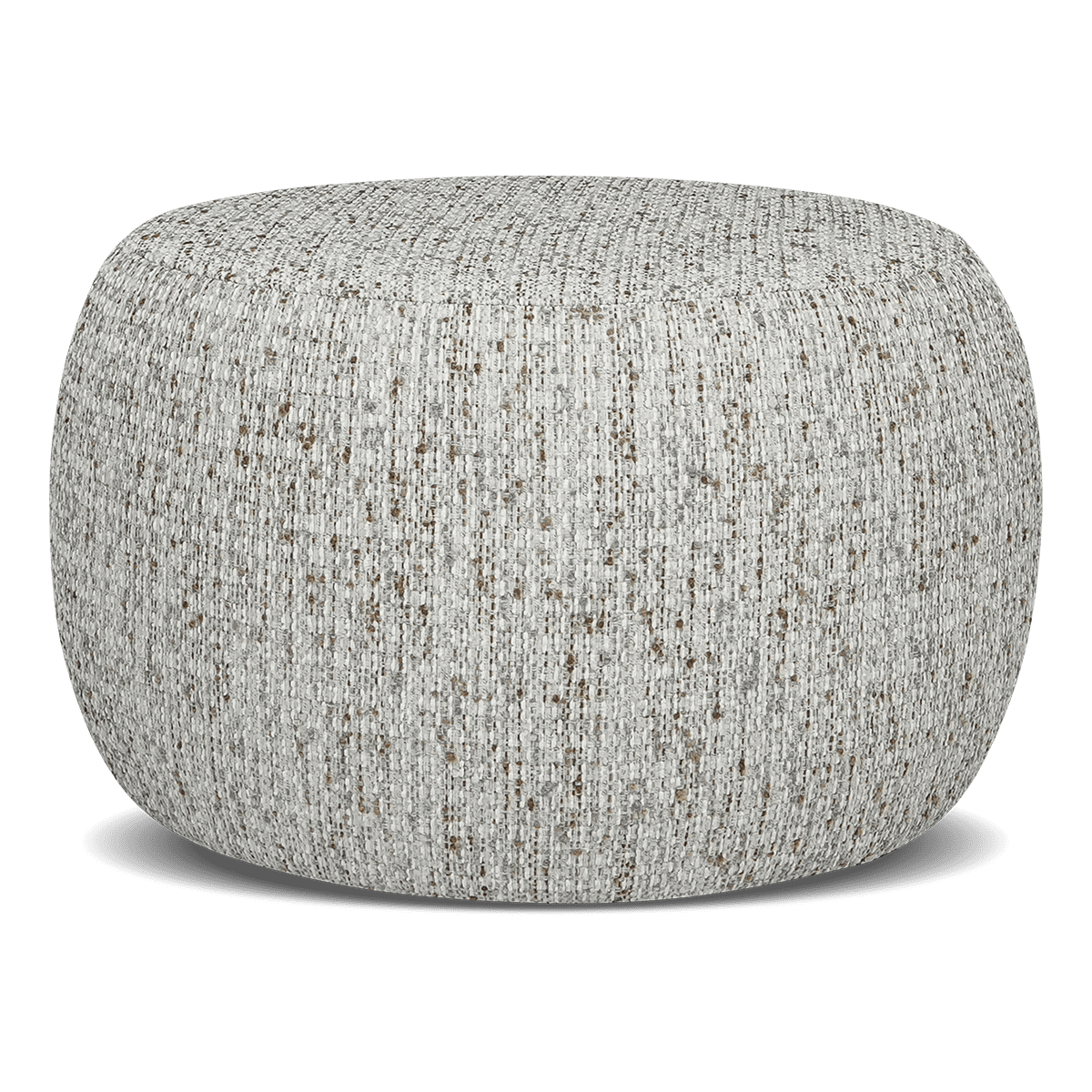
An ottoman can sit in front of a sofa as a softer alternative to a conventional coffee table, move aside when more floor space is required or provide additional seating when the room is full. The Avila large grey ottoman by Uttermost is substantial enough to occupy the centre of a seating group and can also work with a tray when a firmer surface is needed.
Benches offer another form of flexible seating. Their lack of a high back keeps sightlines open, which can be valuable in larger rooms or between two connected areas.
This flexibility changes the character of a living room. Formal seating can remain in place while lighter pieces adapt around the number of people using it.
Explore ottomans and benches for pieces that can take on more than one role within the room.
Lighting should follow the seating
Once the furniture is in place, lighting can make individual seating areas feel more complete.
A floor lamp beside an accent chair provides a pool of light without requiring another piece of furniture. Its position should relate closely to the chair while leaving enough clearance for someone to sit down and move around it comfortably.
In a larger living room, several sources of light at different heights are usually more effective than relying on one central ceiling fixture. Floor lamps, table lamps and softer ambient lighting allow the room to change between everyday use and entertaining.
This layered approach also gives larger seating arrangements greater intimacy after dark. A chair and occasional table placed away from the main sofa can feel disconnected during the day yet become its own quieter area once lit individually.
Mirrors can expand the composition
A decorative wall mirror can influence the room without occupying floor space.
Placed opposite an opening or within view of a seating group, a mirror extends sightlines and reflects another part of the interior. In a compact living room, this can give the conversational area greater visual depth.
Scale is important. A small mirror floating above a substantial sofa or console can appear incidental. A larger piece has enough presence to relate to the furniture beneath it and can become part of the architecture of the wall.
Its position should also respond to what it reflects. A view towards artwork, lighting or another well-resolved part of the room adds more than a reflection of an empty wall.
Leave room for the living room to change
Entertaining rarely happens in exactly the same way every time. Four people may gather closely around a coffee table one evening while a larger group requires chairs, stools and ottomans to shift.
A successful living room furniture arrangement allows for that change without losing its structure.
Start with the principal seating then look at what happens between and around it. Can an accent chair turn towards another guest? Is there somewhere to place a drink beside each seat? Can an ottoman move easily? Are the walkways still clear when more people are in the room?
The answers often lie in the smaller pieces rather than the sofa itself.
For more on choosing furniture for the way a room is used, explore Tips for finding the perfect seating for your space, How to create a modern minimalist living room and How to choose furniture that will still feel right ten years from now.
Featured collection





YOU MAY ALSO BE INTERESTED IN
YOU MAY ALSO BE INTERESTED IN
