
Order Total(Inclusive of VAT)



 Proceed to Checkout

There is something almost radical about an empty space in a room. In a culture that defaults to filling, layering and curating every surface, choosing to leave space deliberately feels counterintuitive. And yet every experienced interior designer will tell you the same thing: the rooms that stay with you longest are rarely the busiest ones.
Negative space interior design is not a trend. It is a principle and one that architects and designers have returned to consistently across centuries, from the spare interiors of Japanese architecture to the pared-back luxury of contemporary Scandinavian living. What the principle recognises is something that feels almost obvious once you understand it: a room needs room to breathe and the furniture within it gains its power partly from what surrounds it.
What clutter does to the mind
There is now substantial evidence that visual clutter has a measurable effect on mental wellbeing. When a room is crowded — with objects, with furniture, with competing surfaces — the brain processes this as complexity and responds with low-grade stress. The eyes cannot settle. There is nowhere to rest attention. Decisions about where to look, where to sit and how to move become fractionally more effortful and that effort accumulates over a day spent at home.
The inverse is equally true. Spaces designed with restraint produce a corresponding sense of calm. Minimalist luxury interiors understand this not as deprivation but as precision: every piece in the room earns its place and the space around it is as intentional as the piece itself.
Furniture as the anchor, not the crowd
The most common misunderstanding about minimalist luxury interiors is that they require less furniture. What they actually require is better furniture. Fewer pieces, but each one confident enough to define the room rather than simply occupy it.
The Match 3 seater sofa exemplifies this logic. Its clean, considered silhouette is designed to be read from any angle as a complete and finished statement. There is no decorative excess, no competing detail. Placed in a room with adequate breathing space around it, it commands attention not through volume but through proportion and form. This is what open space interior concepts look like in practice: a sofa that anchors the room rather than cluttering it, inviting the eye to rest rather than search.
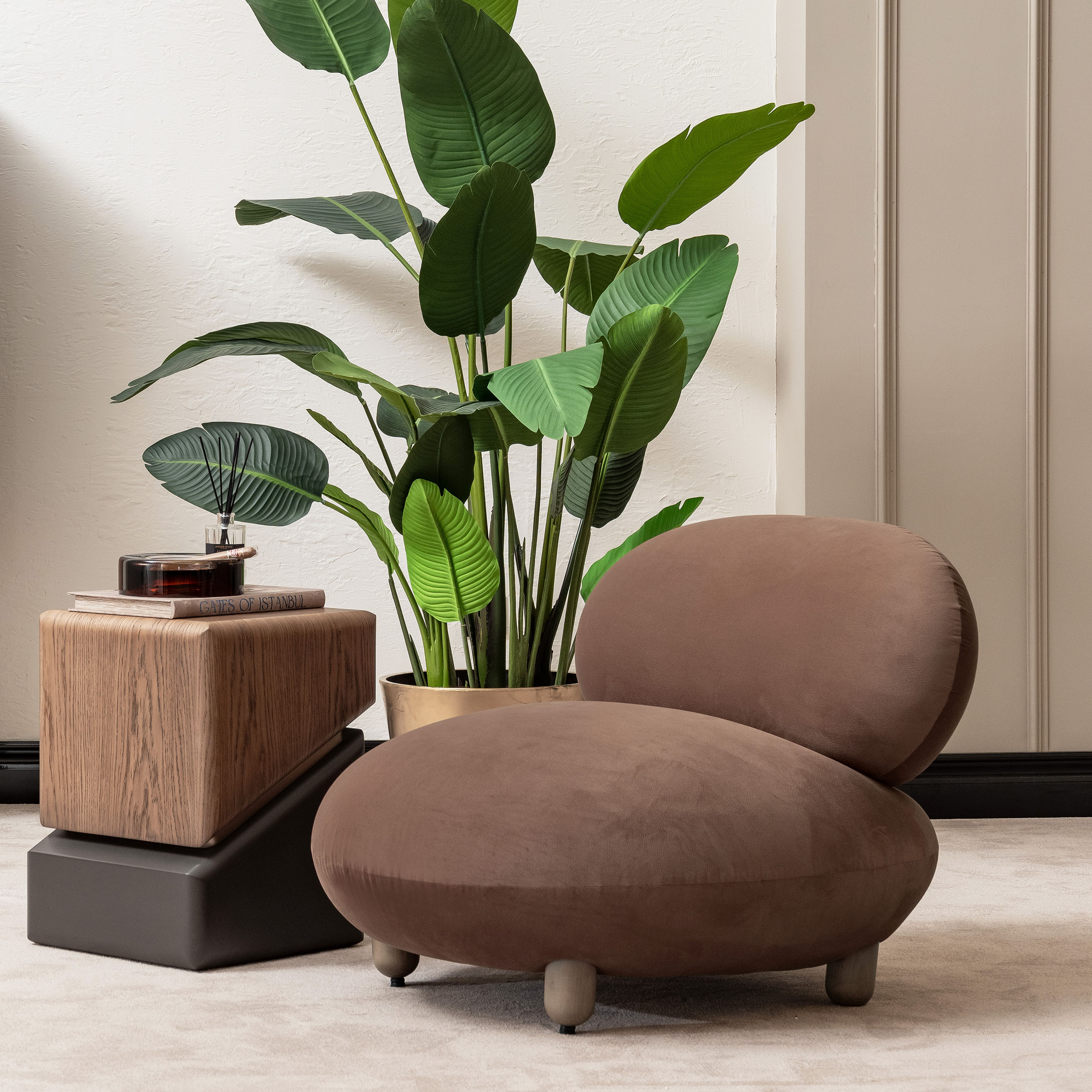
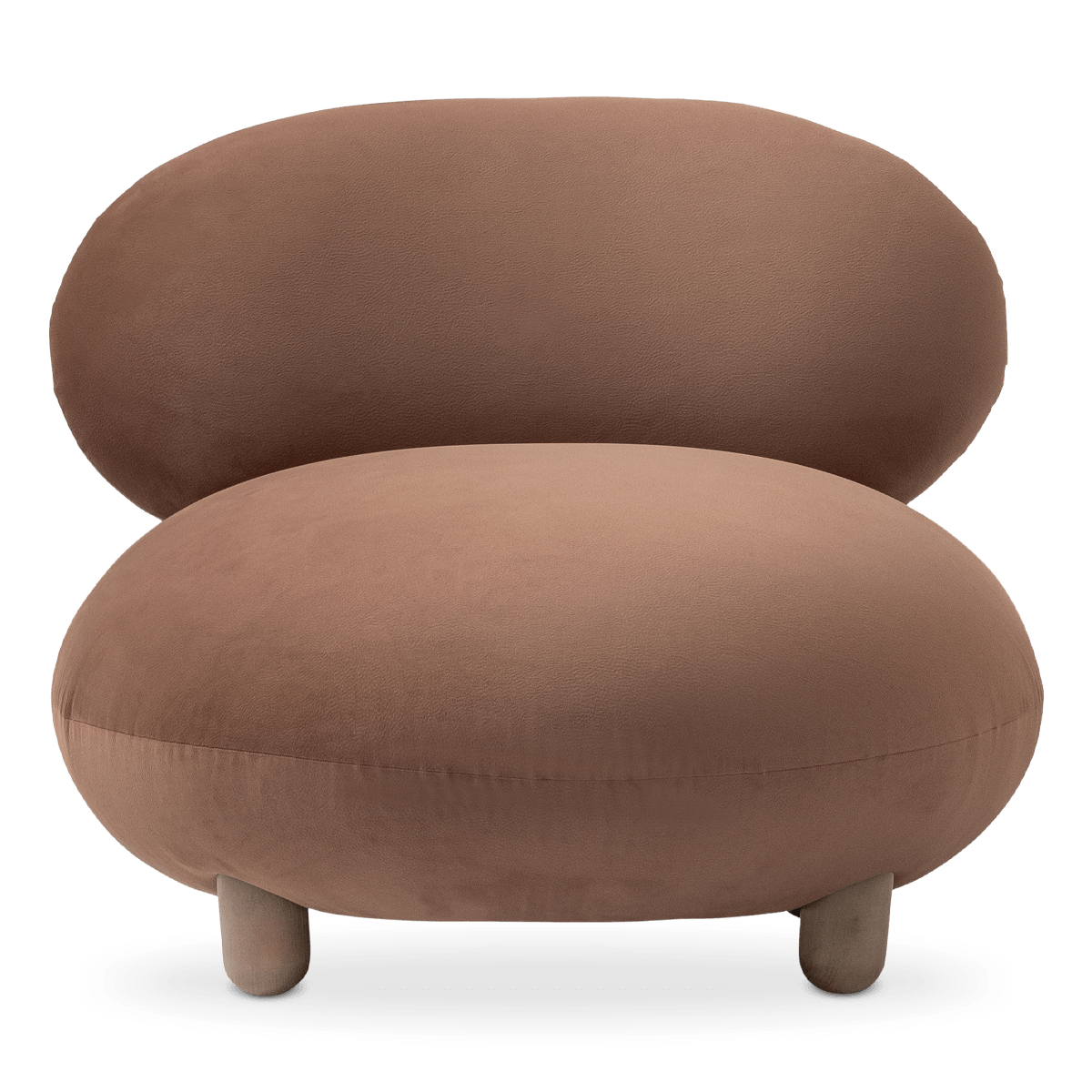
Alongside it, the Bristol Point accent chair by Michael Amini brings a complementary softness without disrupting the room's quiet authority. Its gently rounded form, upholstered in a soft faux suede and supported by understated wooden legs, is designed for "moments of quiet" — the brand's own description speaks the language of considered space. In a room that is already edited with intention, a chair of this character becomes something to return to rather than simply to sit in. It adds human scale and warmth without crowding either.
The entryway as the first argument for restraint
If you want to understand what space planning interior design really means, stand in your entryway. This is the room that sets the emotional register of everything that follows. An entryway that is cluttered signals chaos; one that is spare and deliberate signals that what lies beyond is considered.
The Lotus Bay entrance table by Michael Amini belongs in this conversation. Built with clean lines and a serene sand finish, with brushed nickel legs featuring marbleized inlays and a quietly elegant lower shelf, it offers surface and structure without imposing. It invites exactly what a well-designed entrance table should invite: a lamp, a considered object and space. Not a collection of things. Not a surface piled with the daily overflow. A single, calm statement that says the home beyond is intentional. In the context of decluttered luxury homes, the entrance table is often the piece that sets the tone for everything that follows — and this one sets it with quiet confidence.
Light as space
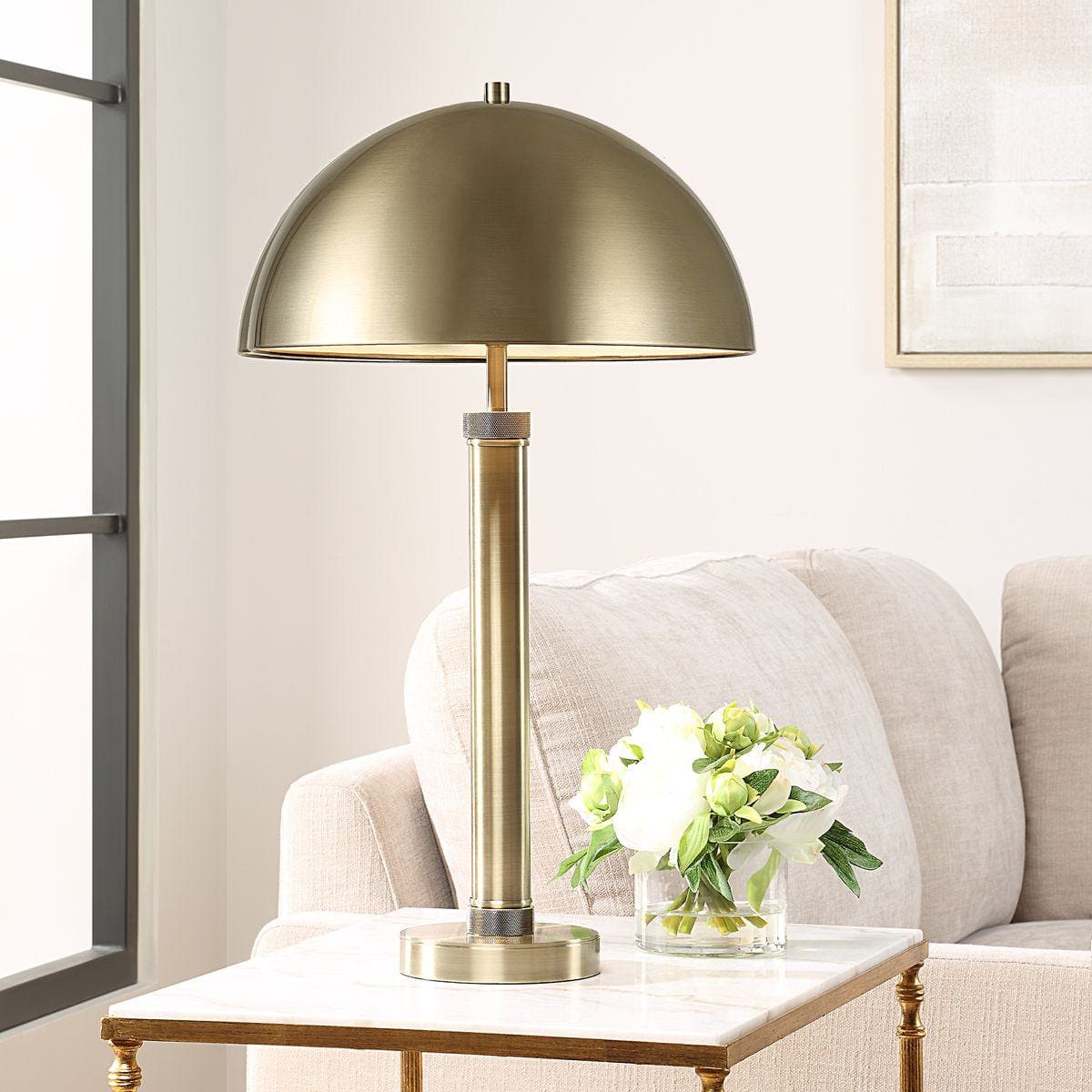
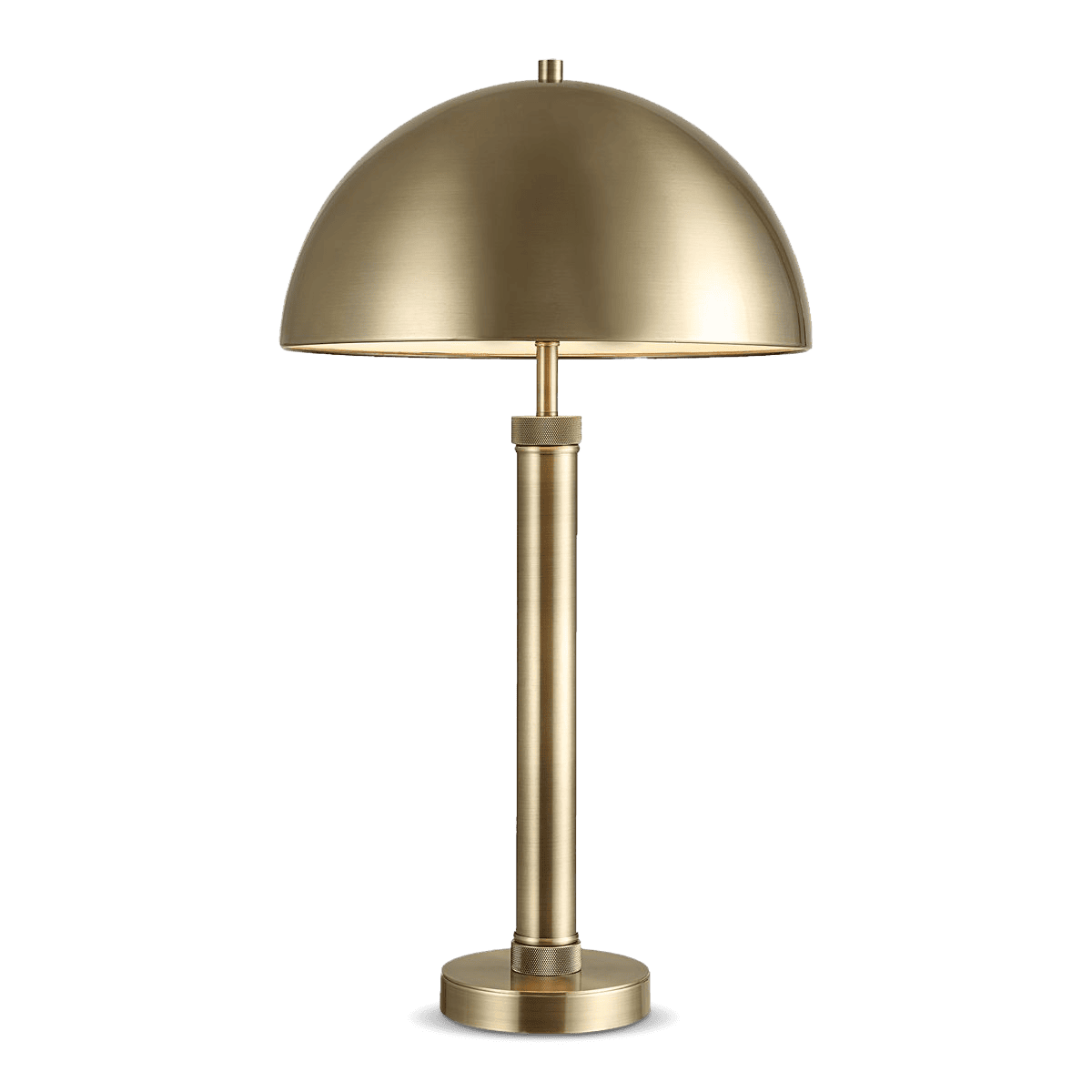
One of the less-discussed tools in minimal home styling is artificial light and the way it distributes weight and interest through a room. A well-chosen lamp does not just illuminate; it defines a zone, draws the eye and gives scale to the space around it. In a room that relies on restraint, a lamp becomes one of the few decorative gestures — and it needs to justify itself.
The Uttermost table lamp operates on this understanding. Uttermost, known for combining premium materials with high-style design and minimal ornamentation, produces lamps that read as sculptures in quieter rooms. In a space built on the principles of negative space interior design, a lamp of this character provides visual warmth without adding visual noise. It contributes without competing — which is precisely the quality that high-end minimalist décor demands of every object in the room.
The philosophy, simply stated
Minimalism in luxury interiors is not about austerity. It is not about denying yourself beauty or comfort. It is about the discipline to choose well and then to stop. To resist the urge to fill every corner and surface and instead allow what you have chosen to be fully present.
Modern minimalist furniture chosen with care, arranged with awareness of space and proportion and lit with intention, produces interiors that feel genuinely calm. Not sparse. Not cold. Calm. There is a meaningful difference and it is one that anyone who has spent time in a beautifully edited room understands immediately.
Featured collection

 Notify Me

YOU MAY ALSO BE INTERESTED IN
YOU MAY ALSO BE INTERESTED IN
